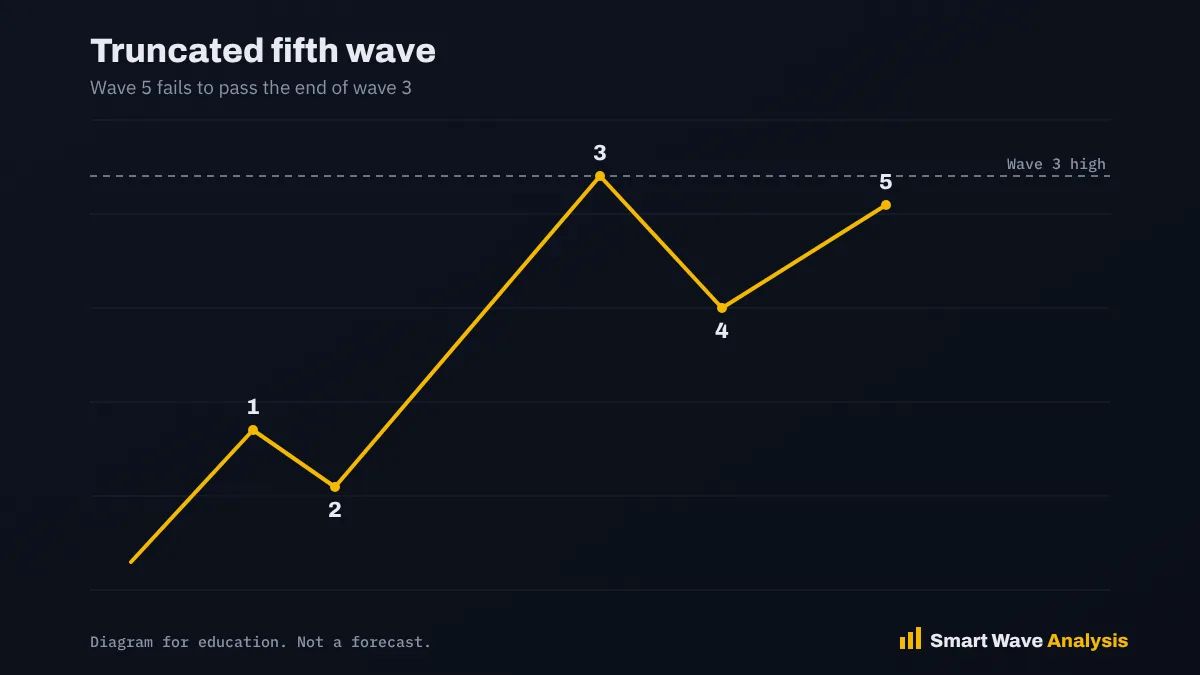
A truncated fifth wave, also called a failure, is a wave 5 that does not move beyond the end of wave 3. It still has five smaller waves inside it. Truncations often follow a very strong wave 3 and warn of weakness in the trend.
How to recognize a truncation
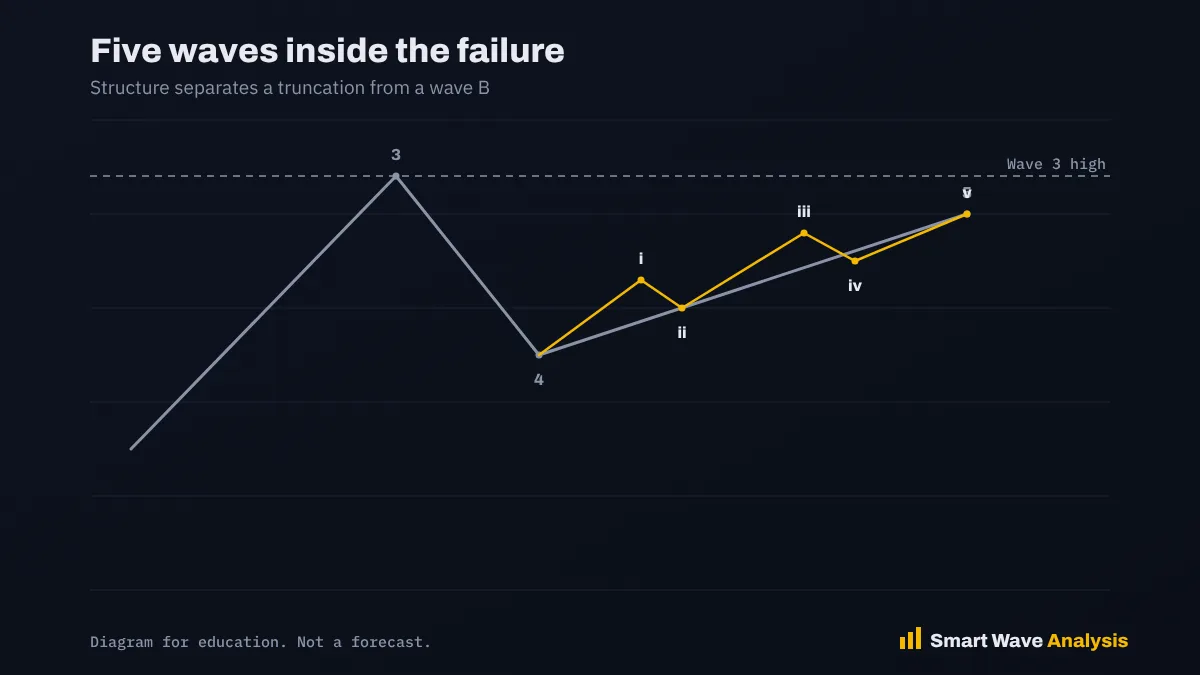
In a truncated impulse, wave 5 subdivides into five smaller waves but ends short of the wave 3 extreme. In an uptrend, the wave 5 high is below the wave 3 high. The internal five-wave structure is what separates a truncated fifth from a simple wave B or a failed breakout.
When truncations happen
Truncations often occur after an unusually strong or extended wave 3. The market has used up much of its energy, so the last push cannot reach a new extreme. They also appear when news shifts suddenly during wave 5.
What it means
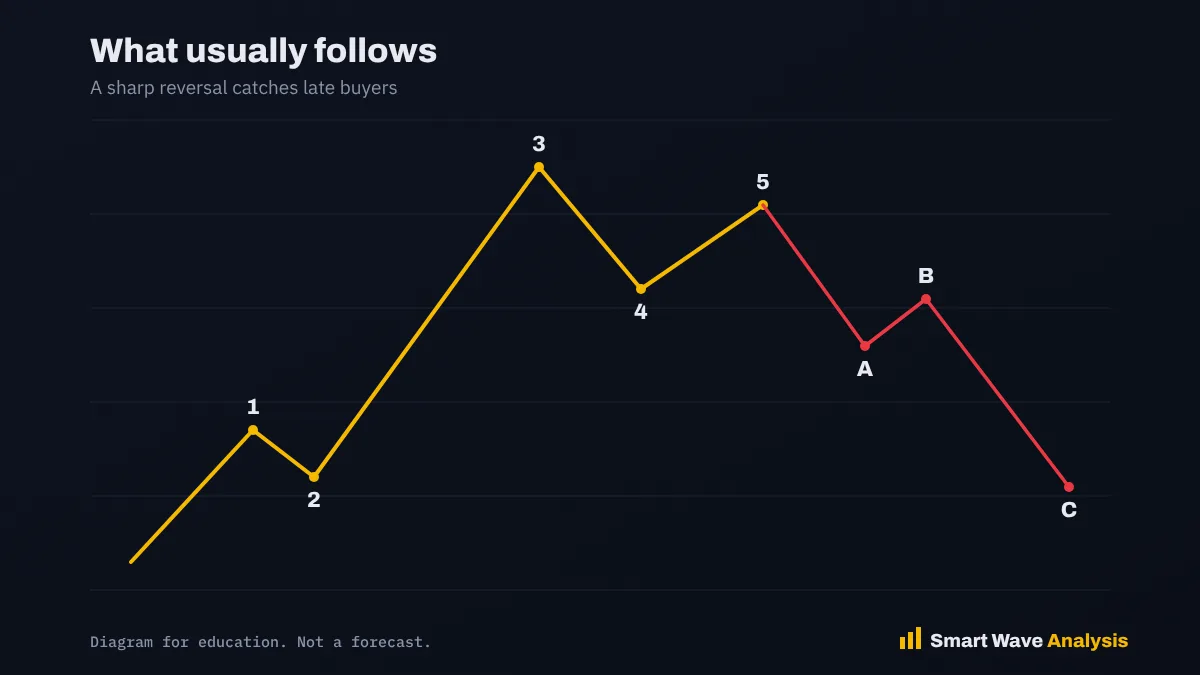
A truncation is a sign of weakness. It often leads to a sharp reversal, because traders expecting a new high are caught off guard. The correction that follows can be deeper than usual.
Practical tips
- Do not assume a truncation in advance. It is uncommon, and most fifth waves do pass the end of wave 3.
- Confirm with structure: you need five clear smaller waves in wave 5.
- If you are long near a wave 5 target, consider tightening stops when momentum fades before a new high.
Frequently asked questions
What is a truncated fifth wave?
A wave 5 that ends without passing the end of wave 3, while still showing five smaller waves inside.
Are truncations common?
No. They are uncommon, so analysts should not expect one without clear evidence.
What usually follows a truncation?
A sharp move in the opposite direction, since the failure catches many traders by surprise.
Sources and further reading
- Frost, A. J. and Prechter, R. R., Elliott Wave Principle: Key to Market Behavior (1978) (Wikipedia (author page))
- Elliott wave principle (Wikipedia)
Educational content only. Nothing on this page is financial advice or a recommendation to buy or sell. Trading involves risk and you can lose money. Elliott Wave counts are probabilities, not certainties. Read our full disclaimer and affiliate disclosure.