Why trade ETFs with Elliott Wave
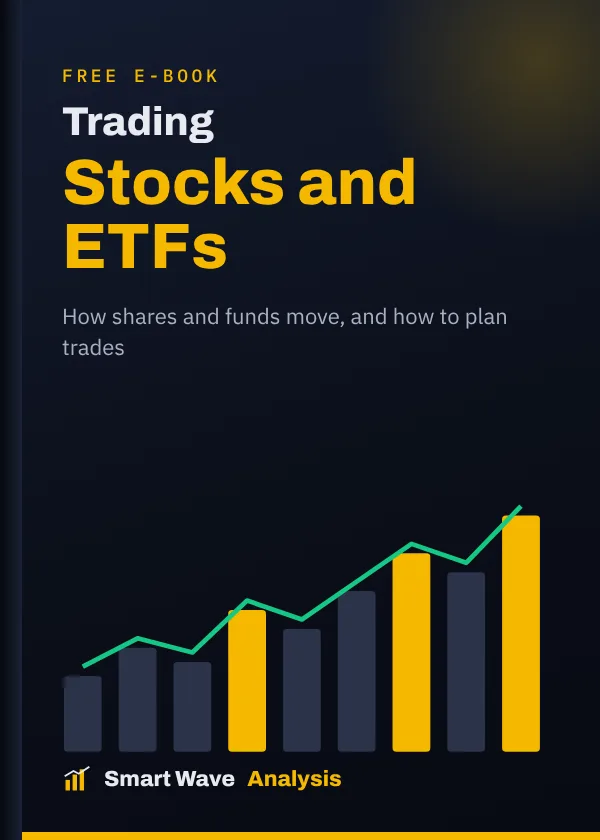
An exchange traded fund holds a basket of stocks. Because news about one company has less effect on the whole basket, ETF charts often show cleaner waves than single stocks. Index funds such as SPY and QQQ are also among the most traded securities in the world.
Sector rotation
Sector funds show where money is moving. When discretionary stocks (XLY) lead staples (XLP), investors are taking risk. When energy (XLE) leads, oil prices are often rising. Comparing sector counts with the S&P 500 count can confirm or challenge your view of the market.
ETFs Elliott Wave FAQ
What is an ETF?
An exchange traded fund is a fund that holds a basket of assets and trades on an exchange like a stock.
Are ETF waves the same as index waves?
Index ETFs such as SPY follow their index closely, so the wave structure is the same.
What are sector ETFs?
Funds that hold the companies of one sector, such as energy (XLE) or financials (XLF).
Sources and further reading
- Mutual funds and ETFs (U.S. SEC Investor.gov)
Educational content only. Nothing on this page is financial advice or a recommendation to buy or sell. Trading involves risk and you can lose money. Elliott Wave counts are probabilities, not certainties. Read our full disclaimer and affiliate disclosure.